Orange wine in 2026 is no longer a curiosity reserved for natural wine bars and adventurous sommeliers. It has earned a permanent spot on wine lists, retail shelves, and dinner tables across the country. If you have been wondering what all the conversation is about, you are in the right place.
Orange wine sits in a fascinating middle ground between white and red wine. It looks amber or copper in the glass, tastes more textured than a typical white, and carries flavors that can surprise even experienced wine drinkers. Understanding how it is made helps explain why it tastes the way it does.
This guide covers everything you need to know – what orange wine actually is, how producers make it, what to expect when you open a bottle, and which specific bottles are worth seeking out in 2026. No hype, just honest information from someone who has spent a lot of time with these wines.
What Is Orange Wine? The Basics Explained
Orange wine is a white wine made with extended skin contact. That is the short answer. When white grapes ferment with their skins left in the juice, the skins release tannins, phenolic compounds, and pigments. The result is a wine with more structure, color, and complexity than a conventionally made white.
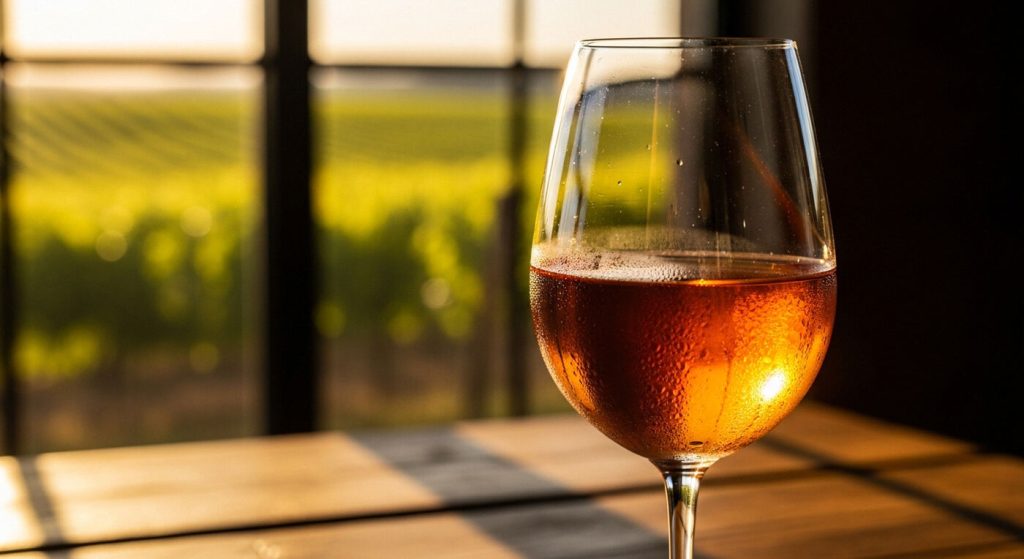
The name comes from the color, not from any citrus fruit. Depending on the grape variety and how long the skins stay in contact with the juice, orange wine can range from pale golden-amber to deep copper or even brownish-orange. Some light skin-contact wines barely look different from a standard white. Others look like apple juice or tea.
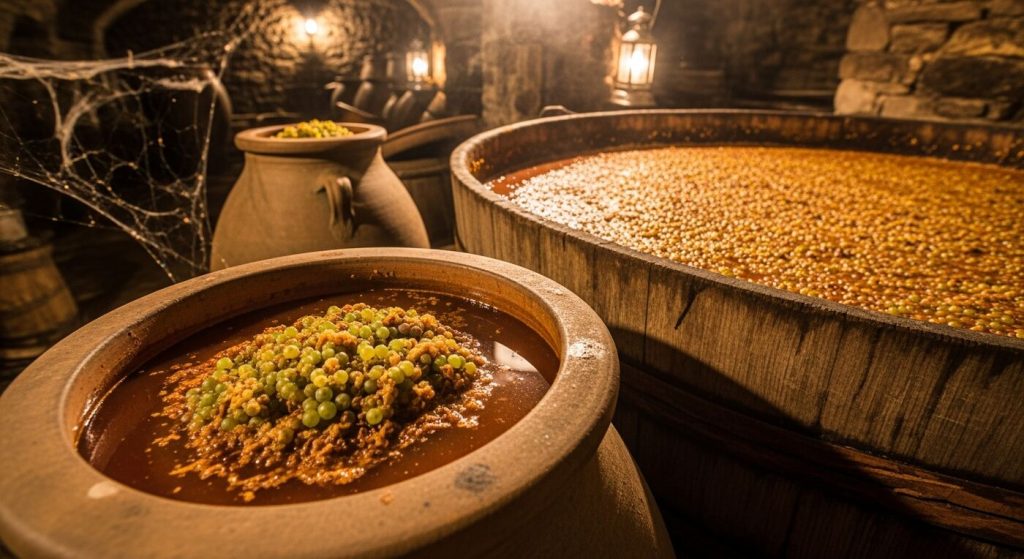
A common misconception is that orange wine is a new trend. It is actually one of the oldest winemaking methods in existence. Winemakers in the country of Georgia have been fermenting white grapes with their skins in clay vessels called qvevri for thousands of years. The modern revival of this technique gained momentum in northeastern Italy and Slovenia in the 1990s, and it has been growing steadily ever since.
Orange wine is sometimes grouped under the natural wine umbrella, but that is not always accurate. Some producers make skin-contact wines with very little intervention and no added sulfites. Others use traditional cellar practices with careful temperature control and some sulfur. The defining characteristic is the skin contact, not the production philosophy.
How Orange Wine Is Made: Skin Contact and What It Changes
Standard white wine production removes the grape skins almost immediately after pressing. The juice ferments on its own, which keeps the wine pale, aromatic, and low in tannins. Orange wine flips that process. The skins stay in contact with the juice during fermentation, sometimes for just a few days and sometimes for months.
The length of skin contact makes a significant difference in the final wine. A few days of skin contact produces a lightly amber wine with mild tannins and subtle texture. Several weeks of contact results in a deeper color, firmer tannins, and more pronounced oxidative notes like dried fruit, nuts, and beeswax. Extended maceration of six months or more – common in traditional Georgian qvevri wines – produces very tannic, deeply colored wines with complex, savory characteristics.
Some producers use whole-cluster fermentation, where entire grape bunches including stems are included. This adds even more tannin and a slightly herbal or spicy quality. Others destem the grapes first. Both approaches are valid, and neither is objectively superior.
The vessel also plays a role. Clay amphorae and qvevri allow micro-oxygenation through the porous walls, which softens tannins over time and encourages certain oxidative flavors. Stainless steel tanks preserve freshness and fruit. Neutral oak barrels sit somewhere in between. Each choice shapes the wine’s personality in a different way.
What Does Orange Wine Taste Like? Flavors, Texture, and Food Pairing
Orange wine tastes like nothing else in the wine world. That is not an exaggeration – it genuinely occupies its own flavor territory. Common descriptors include dried apricot, quince, honey, bruised apple, walnut, chamomile, ginger, and dried orange peel. There is often a savory, almost tea-like quality that you do not find in white or red wine.
The texture is one of the most distinctive features. Because tannins are present, orange wine has a gripping, slightly chewy quality on the palate. It is heavier than most whites but lighter than most reds. Some people find this immediately appealing. Others need a bottle or two before they appreciate it. That is completely normal.
One practical note worth mentioning: orange wine is often served slightly warmer than conventional white wine. Try it at around 55 to 60 degrees Fahrenheit rather than ice cold. Serving it too cold masks the complexity and makes the tannins feel harsh. A short time in the refrigerator rather than a long chill is usually enough.
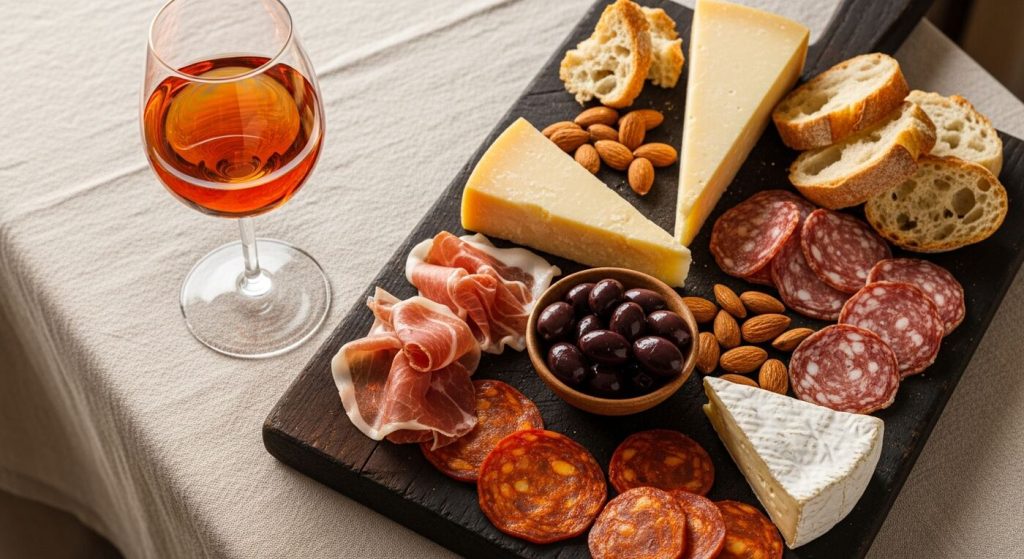
Food pairing is one of orange wine’s genuine strengths. The tannin structure helps it stand up to dishes that would overwhelm a delicate white wine. Consider these pairing directions:
- Aged cheeses, especially hard and semi-hard varieties like Manchego, Comte, or aged cheddar
- Charcuterie and cured meats
- Middle Eastern and North African cuisine, including hummus, falafel, and tagines
- Roasted root vegetables and earthy grain dishes
- Spiced lentil soups and curries with moderate heat
- Grilled fish with bold marinades or sauces
- Mushroom-based dishes
Orange wine tends to struggle with very delicate, lightly seasoned dishes. A simple steamed fish fillet or a fresh green salad with light vinaigrette can be overpowered by a tannic skin-contact wine. That mismatch is a common mistake for first-time buyers who pick a bold orange wine and then pair it with subtle food.

Best Orange Wine Bottles to Try in 2026
Finding reliable orange wine bottles is easier now than it was five years ago. Retailers nationwide carry a growing selection, and online wine shops have made regional producers accessible to buyers across the country. Here are some bottles worth knowing about in 2026, organized by style so you can find something that fits your experience level and preferences.
Keep in mind that orange wine production varies by vintage. What you read in a review from two years ago may not perfectly describe the bottle on the shelf today. Buy from a shop with knowledgeable staff who can tell you about the current release, or look for producers who have maintained consistent quality over multiple vintages.
For the Orange Wine Beginner: Light Skin-Contact Styles
These wines have shorter maceration periods, usually a few days to two weeks. They are approachable, not too tannic, and a good entry point if you are unfamiliar with the style.
- Yetti and the Kokonut “Mt Savagnin” (South Australia) — Best for beginners who want a fruit-forward orange wine without aggressive tannins. Made from Savagnin with brief skin contact, it shows tropical fruit, saline mineral notes, and gentle grip.
- Scholium Project “The Prince in His Caves” (Sonoma, California) — Best for those who want a domestically produced skin-contact wine with identifiable fruit character. Made from Sauvignon Blanc with extended skin contact, it is structured, layered, and unlike any conventional white. Note that production is very limited and recent vintages may be difficult to find; check with your retailer.
For the Curious Wine Drinker: Medium-Bodied Skin-Contact Whites
These bottles represent the heart of the orange wine category. They have more color, more tannin, and more complexity than the beginner options above. They reward attention and pair well with food.
- Gravner “Ribolla” (Friuli-Venezia Giulia, Italy) — Best for experienced wine drinkers who want to understand where the modern orange wine revival started. Josko Gravner is one of the key figures in the movement. His wines are fermented and aged in Georgian clay qvevri buried underground. The Ribolla Gialla is his current flagship white, offering dried fruit, saffron, and remarkable depth.
- Radikon “Jakot” (Friuli-Venezia Giulia, Italy) — Best for those who want a benchmark bottle from the Italian side of the Collio region. Stanko Radikon’s work with extended maceration on Friulano grapes helped define this category for a generation of winemakers. The estate is now run by his son Sasa, who continues the same methods.
- Domaine Matassa “Cuvée Marguerite” (Roussillon, France) — Best for drinkers who enjoy a slightly more oxidative, textured style with Mediterranean character. A blend of Macabeu, Muscat d’Alexandrie, and Muscat à Petits Grains, with real presence on the palate.
For the Experienced Orange Wine Enthusiast: Traditional Georgian Styles
These wines represent the oldest winemaking tradition in the category. Fermented in buried clay qvevri with very long skin contact, they are often deeply colored, very tannic, and quite savory. They are not entry-level wines, but they are some of the most distinctive bottles you can find.
- Pheasant’s Tears “Rkatsiteli” (Kakheti, Georgia) — Best for drinkers who want an authentic qvevri-aged Georgian skin-contact wine. Rkatsiteli is one of Georgia’s most important native grapes. Expect dried herbs, dried fruit, firm tannins, and a distinctly earthy finish.
- Iago’s Wine “Chinuri” (Kartli, Georgia) — Best for those who want to explore a lighter, more aromatic Georgian variety. Chinuri grown in the Mukhran Valley produces a wine that is still textured but has more freshness than the heavier Kakheti styles.
As a Gift: Natural Wine Gift Sets Including Orange Wine
If you are shopping for someone who is curious about natural and skin-contact wine, a curated gift set is a practical option. Several retailers and wine clubs offer sets that include an orange wine alongside complementary natural reds and whites. This lets the recipient compare styles and develop context for what makes orange wine distinct. Look for sets that include tasting notes and some background on the producers.
Tips When Buying and Drinking Orange Wine
Orange wine has a few quirks that catch new buyers off guard. Knowing these ahead of time makes the experience better.
- Serving it too cold: As mentioned above, serving orange wine at white wine temperature often mutes its best characteristics. Let it warm up a little before pouring.
- Expecting it to taste like white wine: Orange wine is its own category. Going in with expectations shaped by Sauvignon Blanc or Pinot Grigio sets you up for confusion. Approach it fresh.
- Assuming cloudy means flawed: Many orange wines are unfined and unfiltered. Light cloudiness or sediment is normal and not a sign of a bad bottle.
- Ignoring the vintage: Orange wines can vary significantly from year to year, especially from small natural producers. A warm vintage might produce a richer, more oxidative wine. A cool vintage might yield more acidity and freshness.
- Buying the cheapest bottle available: Budget skin-contact wines exist, but quality varies widely at the low end of the price range. Spending a little more usually means you get a wine where the skin contact is intentional and controlled, not a shortcut.
- Opening and finishing it immediately: Many orange wines benefit from an hour in a decanter or even opening the bottle and waiting before pouring. The tannins soften and the wine opens up considerably.
Frequently Asked Questions
Is orange wine always made from orange grapes?
No. Orange wine can be made from any white grape variety. The orange color comes from the grape skins and seeds during fermentation, not from the grape variety itself. Common grapes used include Pinot Grigio, Gewurztraminer, Ribolla Gialla, Rkatsiteli, Muscat, and many others. The grape variety influences the flavor, but the skin contact is what makes it orange wine.
Does orange wine have more alcohol than regular white wine?
Not necessarily. Alcohol content in orange wine depends on the grape variety, the ripeness at harvest, and the fermentation process – the same factors that affect any other wine. Some orange wines are quite low in alcohol, around 11 to 12 percent. Others can reach 14 percent or higher. Skin contact alone does not raise alcohol levels.
How long can you store an open bottle of orange wine?
Orange wine generally holds up better after opening than most white wines, largely because of its tannins and, in some cases, slightly higher oxidation from the winemaking process. A recorked bottle stored in the refrigerator often tastes good for two to four days. Some tannic, traditionally made orange wines actually improve on day two or three after opening. Taste it again before assuming it has gone bad.
Why does my orange wine smell like vinegar or nail polish remover?
A strong vinegar smell usually indicates volatile acidity, which means the wine has too much acetic acid. This is a flaw, not a feature, and it is more common in poorly made natural or low-intervention wines. A slight sharpness or funkiness can be normal in some styles, but a wine that smells strongly of vinegar or acetone is not meant to taste that way. Return it if possible or use it in cooking.
Can I age orange wine, or should I drink it young?
Some orange wines age very well, particularly those with significant tannin structure and high natural acidity – like traditional Georgian qvevri wines or the longer-macerated Friulian producers. These can develop in the bottle for five to ten years or more. Light skin-contact whites with shorter maceration are generally better consumed within two to four years of the vintage. Check with the producer or retailer if you are unsure about a specific bottle’s aging potential.