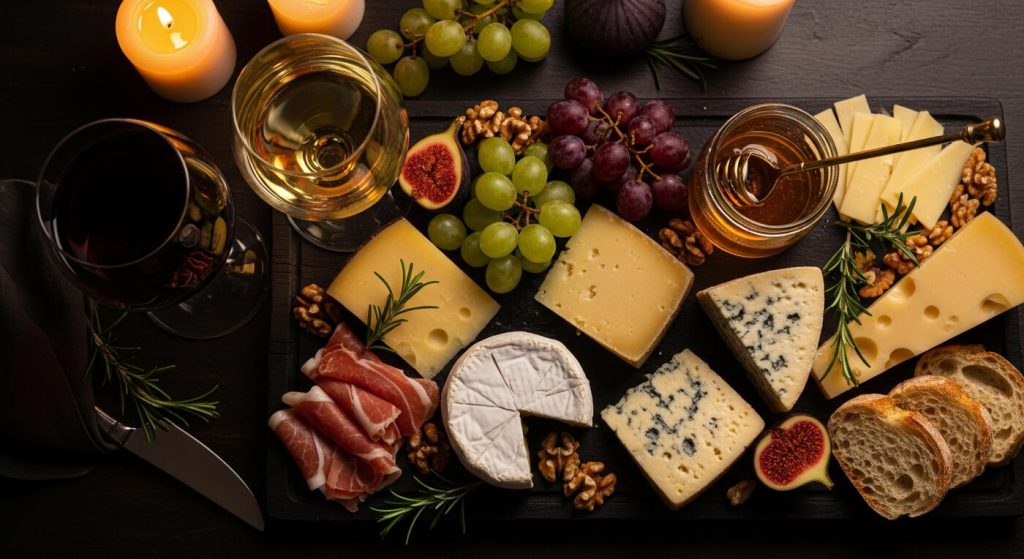
Wine and cheese pairing does not have to feel intimidating. Whether you are hosting a dinner party, building your first cheese board, or simply trying to enjoy a better glass of wine at home, understanding a few simple principles can make a real difference in how both the wine and the cheese taste.
The good news is that you do not need a sommelier certification or a cellar full of rare bottles. Most successful pairings come down to balance – matching the weight, intensity, and texture of your wine to the cheese on your plate. Once you understand that core idea, everything else starts to fall into place.
This beginner wine pairing guide walks you through the basics step by step. You will learn how wine and cheese interact, which classic combinations work well together, and how to build a beautiful board that impresses every guest at the table.
Why Wine and Cheese Work So Well Together
Wine and cheese have been served together for thousands of years, and there is real science behind why they pair so naturally. Both are fermented foods, and their shared flavors – earthy, tangy, fruity, and savory – often complement or enhance each other in ways that neither achieves alone.
The fat in cheese softens the tannins in red wine. Tannins are the compounds that create that dry, slightly grippy sensation on your tongue after a sip of Cabernet Sauvignon or Syrah. When you take a bite of a fatty cheese like aged cheddar, those tannins feel much smoother. The cheese essentially cushions the wine’s rough edges.
Acidity plays an equally important role. A crisp, high-acid wine like Sauvignon Blanc or Champagne cuts through the richness of a creamy cheese. Each sip cleanses your palate so you can fully taste the next bite. Salt in cheese can amplify the fruit flavors in wine, making both taste more vibrant. These interactions are not random – they follow predictable patterns you can learn and use.
One practical tip: avoid high-alcohol wines with very salty or pungent cheeses. High alcohol tends to amplify bitterness and salt, which can make the pairing feel harsh rather than pleasant. A wine around 12 to 13.5 percent alcohol is often a safer starting point when you are experimenting.

The 3 Core Rules of a Beginner Wine Pairing Guide
Pairing wine and cheese is not about memorizing a long list of rules. It is about understanding three simple principles that guide almost every successful match. Once these click, you can walk into any wine shop or cheese counter and make a confident choice.
Rule 1 – Match Intensity. Light, delicate wines pair best with mild, fresh cheeses. Bold, full-bodied wines hold up better against aged, sharp, or pungent cheeses. A heavy red wine will overpower a soft fresh mozzarella. A light Pinot Grigio will disappear next to a strong aged blue cheese.
Rule 2 – Think About Texture. Creamy cheeses benefit from wines with good acidity, because the acidity cuts through the richness. Dry, crumbly cheeses like aged Parmesan or Manchego have less moisture and fat, so they pair well with both reds and whites that have some structure.
Rule 3 – When in Doubt, Go Regional. Wines and cheeses that come from the same region have evolved together over centuries. French Sancerre and local goat cheese, Italian Chianti and Pecorino, Spanish Rioja and Manchego – these regional pairings work because the land, climate, and food culture shaped both products at the same time. This “what grows together, goes together” approach is a reliable shortcut for beginners.
Easy Wine and Cheese Matches: A Beginner’s Pairing List
Here are eight classic wine and cheese matches that hold up consistently. These are starting points, not rigid rules – but they are proven combinations that most people enjoy on first taste.
- Sauvignon Blanc + Fresh Goat Cheese (Chevre): Both are bright, tangy, and herbaceous. The wine’s citrus acidity mirrors the tartness of the cheese perfectly. This is one of the most consistently reliable pairings for beginners.
- Chardonnay + Brie or Camembert: A lightly oaked or unoaked Chardonnay echoes the buttery, creamy quality of bloomy rind cheeses without competing with them. Avoid heavily oaked Chardonnay here, as it can overwhelm the delicate rind flavor.
- Pinot Noir + Gruyere or Brie: Pinot Noir is one of the most food-friendly red wines. Its red fruit notes and soft tannins play nicely alongside earthy, nutty Gruyere and the gentle creaminess of Brie.
- Cabernet Sauvignon + Aged Cheddar: This is a classic for good reason. The firm fat content and sharp flavor of aged cheddar softens Cabernet’s tannins, and the wine’s dark fruit character balances the cheese’s saltiness.
- Riesling (dry or off-dry) + Feta or Camembert: Riesling’s bright acidity and subtle sweetness balance salty, tangy feta beautifully. A dry Riesling also complements the mild creaminess of Camembert without overpowering it.
- Sparkling Wine or Champagne + Triple-Cream Cheese: The bubbles and high acidity in Champagne or Prosecco cut through the extreme richness of triple-cream cheeses like Brillat-Savarin. This is an indulgent pairing that earns its place on any special-occasion board.
- Sauvignon Blanc + Lightly Aged Gouda: Gouda’s gentle sweetness and nuttiness soften the crisp acidity of Sauvignon Blanc. This is an approachable pairing for people who are still building their palate.
- Port or Sweet Wine + Blue Cheese: Salty, pungent blue cheeses like Roquefort or Stilton find a natural balance with the sweetness of Port or Sauternes. The contrast is dramatic and intentional – salt and sweet are a compelling combination.
A real-world tip for building this list into a board: choose three or four of these pairings and serve them side by side. Let your guests taste the contrast between a light white pairing and a bold red pairing. That comparison teaches more about wine and cheese pairing than any article ever could.
How to Build a Wine and Cheese Board for Beginners
A well-built cheese board gives your guests a range of flavors and textures. Aim for three to five cheeses that represent different styles. A good starter board might include one fresh cheese, one soft-ripened cheese, one semi-firm cheese, and one aged cheese. That variety ensures there is something for every wine you are pouring.
Here is a simple formula that works for most gatherings:
- Fresh cheese: Chevre (goat cheese) or fresh ricotta – mild, tangy, easy to spread
- Soft-ripened cheese: Brie or Camembert – creamy, earthy, crowd-pleasing
- Semi-firm cheese: Gouda, Gruyere, or Havarti – nutty, slightly sweet, versatile
- Aged/hard cheese: Aged cheddar, Parmesan, or Manchego – sharp, complex, bold
- Optional blue cheese: Gorgonzola or Stilton – pungent, salty, for adventurous palates
Surround the cheese with complementary accompaniments. Honeycomb, dried apricots, fresh grapes, Marcona almonds, fig jam, and an assortment of crackers or sliced baguette all enhance the board without competing with the wine. These additions also help palate-cleansing between tastes.
For portion sizing, plan on about 2 to 3 ounces of cheese per person if the board is an appetizer, or 4 to 5 ounces if it is the main event. Pull your cheeses out of the refrigerator 30 to 45 minutes before serving. Cheese at room temperature has a more open, aromatic flavor than cold cheese straight from the fridge. This single step makes a noticeable difference in how the pairing tastes.
Common Pairing Mistakes and How to Avoid Them
Even experienced wine drinkers occasionally land on combinations that clash. These are the most common missteps beginners make – and the simple adjustments that fix them.
Pairing bold reds with delicate cheeses. A powerful Cabernet Sauvignon or Zinfandel will completely overpower a fresh mozzarella or mild ricotta. The wine drowns out any nuance in the cheese. If you love big reds, reach for an aged or firm cheese that can hold its own.
Serving cheese too cold. Cold cheese mutes its flavor. A Brie pulled straight from the refrigerator tastes like very little. The same Brie at room temperature has a rich, mushroomy, buttery aroma that makes the pairing come alive. Always allow 30 to 45 minutes of rest before serving.
Choosing a high-alcohol wine with a salty cheese. Salt and high alcohol amplify each other in an unpleasant way. A 15 percent Zinfandel paired with a very salty Pecorino or aged Parmesan can taste harsh and boozy. Choose a wine with moderate alcohol, around 12 to 13.5 percent, when you are working with dry, salty cheeses.
Skipping the palate cleanser. Plain water crackers, sliced baguette, or plain bread between tastings reset your palate. Without them, the residual flavors from one pairing bleed into the next and muddy your ability to taste clearly. Keep a small bowl of plain crackers on every board.
Frequently Asked Questions
Do red wines always pair better with cheese than white wines?
No – this is one of the most common misconceptions about wine and cheese pairing. White wines often pair more cleanly with cheese than red wines do, because white wines generally have higher acidity and lower tannins. High-tannin reds can clash with soft, creamy cheeses. Sparkling wine, Sauvignon Blanc, Chardonnay, and Riesling are all strong pairing partners for a wide range of cheese styles.
Can I pair the same cheese with more than one type of wine?
Absolutely. Many cheeses are versatile enough to work with several wine styles. Gouda, for example, pairs well with Sauvignon Blanc, light reds like Pinot Noir, and even off-dry Riesling. The key is matching the intensity – a young, mild Gouda can go lighter, while an aged Gouda handles bolder wines. Experimenting with the same cheese across different wines is actually one of the most educational ways to learn about pairing.
How many wines should I serve at a wine and cheese pairing event at home?
Two to three wines is a manageable and enjoyable range for most home gatherings. A good structure is one white, one light red, and optionally one sparkling or dessert wine. This gives guests enough variety to notice real differences in how each wine interacts with the cheeses, without overwhelming anyone. More than four wines at once tends to fatigue the palate and make meaningful comparison difficult.
What is the easiest wine and cheese pairing for someone who has never tried this before?
Sauvignon Blanc paired with fresh goat cheese is widely considered one of the most approachable and consistent pairings for beginners. Both are bright and tangy, and the match feels intuitive even if you cannot yet articulate why it works. It is also widely available at most wine shops and grocery stores at accessible price points, which makes it an easy first experiment.
Does the price of the wine affect how well it pairs with cheese?
Price has much less to do with pairing success than wine style and structure do. A well-made $15 Sauvignon Blanc can outperform a $60 heavy red when paired with fresh goat cheese, simply because the style is a better match. Focus on the wine’s acidity, tannin level, body, and sweetness rather than its price tag. Understanding those characteristics – which are usually described on bottle labels or shelf talkers – will serve you far better than spending more money.